Showing posts with label 2010. Show all posts

Monday, February 28, 2011

Ten Best Selling Cars of 2010


1. Ford F-Series: 27,630
2. Chevy Silverado: 22,772
3. Honda Accord: 20,759 (1,737 Accord Crosstours included)
4. Nissan Altima: 18,636
5. Toyota Corolla: 17,121
6. Chevy Malibu: 16,439
7. Toyota Camry: 15,792
8. Honda Civic: 14,693
9. Chevy Cobalt: 12,962
10. Ford Fusion: 12,179

Toyota significantly dropped in sales last year, yet Ford has reached the top in the current economy after facing 2 years of losses. And GM has finally made a profit since 2008. Congratulations to the American Auto Industry.

Thursday, January 6, 2011

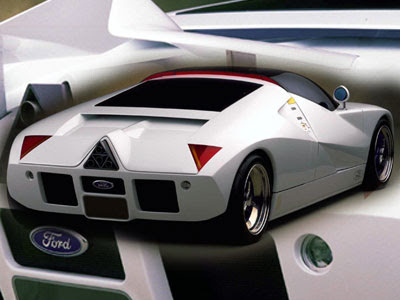
2010 Ford GT90 Super Sport Car Concept going to auction

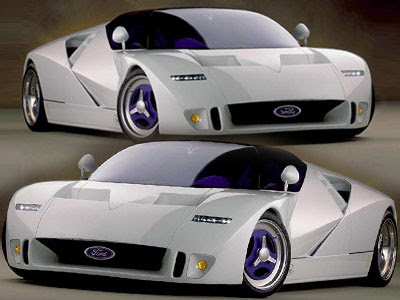
2010 Ford GT90 Super Sport Car Concept

If Ford first introduced the GT90 Concept at the 2010 Detroit Auto Show next month, it would still be one of the most eyecatching cars on the show floor. What's amazing is that Ford unveiled the GT40 successor nearly 15 years ago. What's more, even by today's standards it's still a supercar among supercars.
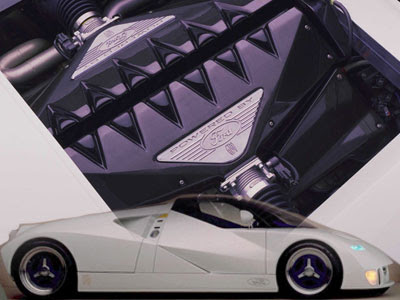
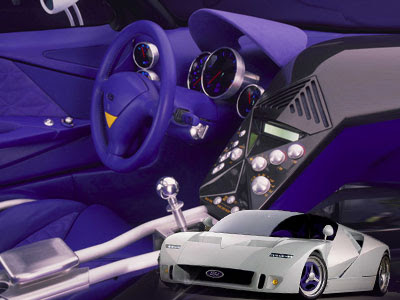
The quad-turbocharged 6.0-litre V12 puts out an estimated 720 horsepower, the body is constructed completely of carbon fiber and top speed is somewhere in the 400 kph range. The only hints that it's not a modern supercar are the all-blue interior and wheels that look dated now.
So what's all the fuss about the GT90 Concept now? RM Auctions in the States has just announced that it will be offering the concept car at its upcoming Arizona sale. That's right, this is your chance to own one of the coolest concept vehicles of all time. This is the first time that the GT90 Concept has ever been publicly for sale at auction, and RM claims that it is in "excellent running condition, having been properly stored and maintained over the year." No estimated on price is given, but we're guessing it will take a large suitcase of cash to take the car home.

2010 Ford GT90 Super Sport Car Concept

The one-off GT90 Concept Car, labeled immediately as "the world's mightiest supercar" by Ford Motor Company on December 6, 1994, was the spiritual successor to the Ford GT40, the product of a colossal feud in the early 1960s between the Blue Oval from Dearborn and the Prancing Horse of Northern Italy. The GT90 draws from the design cues of its heritage and pays homage to the famed Le Mans-winning Ford GT40s of the 1960s, which were created after the failed attempt by Ford to buy out Ferrari.
At a development cost in the neighborhood of $3 million, the GT90 was certainly worthy of pulling styling cues from the original Ford GTs, and although it was never meant for production, it was built according to a Ford press release as a "test bed for technology, engineering and design concepts, and driver-oriented features that eventually may be used in Ford production vehicles."
Officially unveiled to the public in January 1995 at the Detroit Auto Show, the GT90 is finished in bright white with a bright blue and carbon fiber interior. It features a mid engine quad-turbocharged V12 that produces an estimated 720 horsepower and 660 pound-feet of torque. As a result, it had a claimed top speed of 253 mph, which even by today's standards would make it one of the fastest production cars in the world – faster even than a McLaren F1, which was widely considered the world's preeminent supercar at the time.

2010 Ford GT90 Super Sport Car Concept

The engine, which was a 48-valve six-liter V12, had to be combined together with four Garrett Systems T2 turbochargers in order to reach its estimated 720 horsepower and was based on the Ford Modular engine. Created by using parts of two Lincoln V8 engines, engineers removed the last pair of cylinders from the rear of one engine and the first pair of cylinders from the front of the other engine. The cut-down engines were then welded together with the final result being a 90-degree V12, which utilized a 90.2 mm bore and a 77.3 mm stroke to achieve maximum power.
The GT90 features the FFD-Ricardo five-speed manual gearbox found on the XJ220 and, considering the torque load that it is designed to handle, is noted as having a relatively light shift quality. Also borrowed from the XJ220 comes the all around double wishbone suspension that was designed to enable the car to handle well at top speeds.

2010 Ford GT90 Super Sport Car Concept

Using Ford's new "Edge" design philosophy, the car incorporated advanced technology with a mixture of flat planes, angles, glass and triangular shapes that seemingly all collided together. The GT90 was the first car created using this new styling directive from Ford, which went on to be responsible for the creation of other Ford products like the Ka and Cougar. The effect is most impressive and a wonderfully executed stylistic throwback to its GT40 predecessor, which at once stays true to its heritage but acknowledges the advances in modern design. Taken directly from race car technology, the GT90 body panels are molded out of carbon fiber while the chassis is formed out of a honey-comb sectioned aluminum monocoque.
The GT90 is a test bed of advanced technology and design. It sports a tinted, laminated glass bubble over the cockpit and a spoiler that rises off the rear deck at high speeds. According to Ford, it has a "design that tightly enclosed its mechanicals with no wasted space; high tech lighting and blind-spot detection systems; and tiles like those on the space shuttle to shield the V12's exhaust outlets."

2010 Ford GT90 Super Sport Car Concept

After its unveiling in Detroit, the GT90 made its rounds on the Auto Show Circuit in 1995, traveling around the world to Frankfurt and as far away as Tokyo. With few other showings in between, the car recently was shipped over to Europe to be on display in the Ford of Europe 2008 exhibit at the Goodwood Festival of Speed. After returning home, the car was shipped to Alabama where it was on display as part of the Mustang 45th Anniversary Celebration.
This superb concept car remains in excellent running condition, having been properly stored and maintained over the years in between its show appearances. RM Auctions is proud to publicly offer the GT90 for the first time ever at auction. A remarkable one-off piece of automotive history and cutting-edge design, its offering may very well be a once in a lifetime opportunity for Ford devotees and concept car enthusiasts.

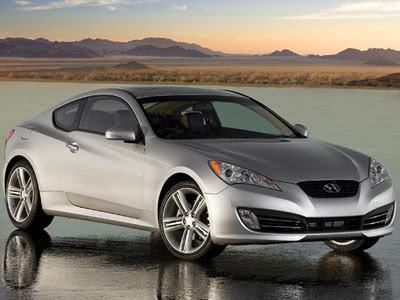
2010 Hyundai Genesis Sports Car Coupe with SHIFTRONIC to handle the additional torque

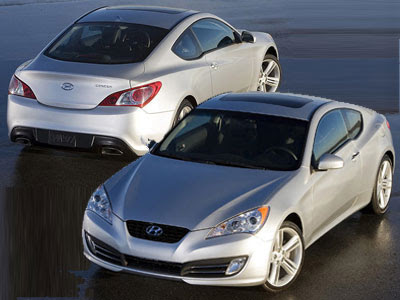
2010 Hyundai Genesis Sports Car Coupe with SHIFTRONIC to handle the additional torque

2010 Hyundai Genesis Sports Car Coupe

The people at South Korean automaker Hyundai are listening to their customers. The 2010 Hyundai Genesis Coupe, confirmed for production and a release early in 2009, follows the tradition of the 2009 Hyundai Genesis in offering a true high performance rear wheel drive, sporty architecture in an affordable package. The 2010 Genesis Coupe is a purpose-built rear-wheel drive sports coupe featuring two performance-focused engines - a212-horsepower 2.0-liter turbocharged four-cylinder engine and a range-topping all-aluminum 306-horsepower, DOHC 3.8-liter V6 engine.

2010 Hyundai Genesis Sports Car Coupe

Genesis Coupe employs a MacPherson strut dual-link front suspension and a five-link rear suspension setup. Both engines are mated to a standard six-speed manual transmission. The Genesis Coupe 2.0t (2.0-liter 4-cylinder turbo) offers an optional five-speed automatic with SHIFTRONIC® while the 3.8-liter V6 offers a ZF six-speed automatic transmission with SHIFTRONIC to handle the additional torque.
The Genesis Coupe follows the styling tradition set forth by the Hyundai Tiburon, but outdoes that aging Hyundai compact sports car in every way. The Genesis Coupe comes with an available naturally aspirated V6, sure to be a motor to find its way into more of Hyundai's lineup. The high output engine offers 310 horses on premium fuel. Following the introduction earlier this year of the rear-wheel drive Genesis sport sedan, Hyundai Genesis Coupe is Hyundai's most dynamic performance car ever and the second consecutive all-new model introduction from Hyundai appealing directly to the car enthusiast.

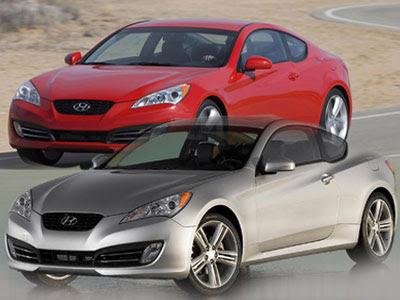
2010 Hyundai Genesis Sports Car Coupe

Hyundai Genesis Coupe uses the same flexible rear-wheel drive architecture originally developed for the Genesis sport sedan.
The 2010 Hyundai Genesis Coupe offers Xenon high-intensity discharge (HID) headlights. The advantages of HID headlamps include greater lighting power, daylight-type lighting and reduced power consumption. In addition, the cut lines of the new HID headlights are extremely precise, providing maximum nighttime visibility without distracting other drivers.
All Hyundai Genesis Coupe models feature standard four-channel ABS with Electronic Brake-force Distribution (EBD) to optimize brake performance under various dynamic loading conditions. The system also includes Brake Assist, which provides maximum ABS-level braking force when a panic stop is detected.

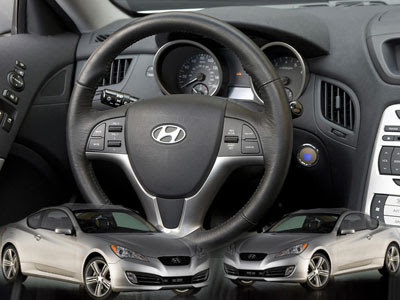
2010 Hyundai Genesis Sports Car Coupe

It is nice to see that Hyundai, an automaker currently enjoying growth and a solid reputation for producing mainstream-market cars that last, is making steps toward the sports car market. The styling of the Genesis Coupe is hit or miss, some will love it and others will wonder what Hyundai was thinking. But, with the sports car pedigree to back it up, the Genesis Coupe should be another worldwide hit for Hyundai.

2010 Hyundai Genesis Sports Car Coupe

The Hyundai Genesis Coupe is offered in three trim levels: the stylish and affordable GS, the premium-sport GT featuring the 3.8-liter V6, and the high-performance SE, available with either the 2.0-liter turbocharged four-cylinder engine or the 3.8-liter V6 engine.

Monday, November 29, 2010

2010 Mercedes-Benz Sport Cars Biome Concept

2010 Mercedes-Benz Sport Cars Biome Concept
Born out of the 2010 LA Auto Show’s Los Angeles Design Challenge, in which automotive designers are given free range to envision the future of transportation, the Biome is meant to blend seamlessly into the planet’s ecosystem. That means all components of the 2010 Mercedes-Benz Sport Cars Biome Concept car are “grown” organically, and it emits pure oxygen and is fully compostable at the end of its service life.
2010 Mercedes-Benz Sport Cars Biome Concept
The basis for the Biome Concept is a vehicle that "grows in a completely organic environment from seeds sown in a nursery." Not only that, but it's powered by a combination of the sun and a chemical bond from an imaginary liquid dubbed BioNectar4534. It's all natural, all organic and all science fiction.
"As the inventor of the motor car, we wanted to illustrate the vision of the perfect vehicle of the future, which is created and functions in complete symbiosis with nature. The Mercedes-Benz BIOME is a natural technology hybrid, and forms part of our earth's ecosystem. It grows and thrives like the leaves on a tree" according to Hubert Lee, Head of the Mercedes-Benz Advanced Design Studios in Carlsbad.
2010 Mercedes-Benz Sport Cars Biome Concept
This year the competition had called for the creation of a vision of a safe and comfortable 2+2 compact car featuring good handling and a first-class design, and weighing only 1,000 lbs (around 454 kg/kerb weight).
The 2010 Mercedes-Benz Sport Cars Biome Concept symbiosis vehicle is made from an ultralight material called BioFibre and tips the scales at just 875.5 lbs (around 394 kg). This material is significantly lighter than metal or plastic, yet more robust than steel. BioFibre is grown from proprietary DNA in the Mercedes-Benz nursery, where it collects energy from the sun and stores it in a liquid chemical bond called BioNectar4534.
2010 Mercedes-Benz Sport Cars Biome Concept
The 2010 Mercedes-Benz Sport Cars Biome Concept is powered by BioNectar4534, which is stored in the BioFibre material of the chassis, interior, and wheels. In addition, Mercedes-Benz has developed a technology to equip trees with special receptors which can collect the excess solar energy and turn it into BioNectar4534. This creates a direct link with nature's energy sources and acts as an incentive to cover mobility energy requirements through more trees and at the same time maintain natural resources.
The Los Angeles Design Challenge is part of the Design Los Angeles conference, taking place from 17 to 18 November 2010 as part of the Los Angeles Auto Show.
2010 Mercedes-Benz Sport Cars Biome Concept

Thursday, November 25, 2010

2010 Spyker Sport Cars C8 Aileron Spyder

2010 Spyker Sport Cars C8 Aileron Spyder
Today introduced the first prototype of the Spyder version of its all-new second-generation sports cars, the Spyker C8 Aileron. Spyker Cars, manufacturer of exclusive, hand-crafted sports cars since 2000. The 2010 Spyker Sport Cars C8 Aileron Spyder was unveiled at the Spyker lounge on Peter Hay Hill on Saturday, and subsequently displayed on the concept lawn at the 59th Pebble Beach Concours d'Elegance on Sunday.
Zeewolde, The Netherlands (4 November 2010) รข€“ The Spyker C8 Aileron Spyder concept makes its UK debut today at MPH The Prestige and Performance Motor Show at Earls Court in London. For the first time, British motoring enthusiasts visiting the annual celebration of performance motoring will be able to lay their eyes on one of the most exclusive cars in the world.
2010 Spyker Sport Cars C8 Aileron Spyder
The Spyker C8 Aileron is an advanced mid-engine, two-seat sports cars, featuring a longer wheelbase than Spyker's existing sports cars, the C8 Laviolette and convertible C8 Spyder. The Spyker C8 Aileron Spyder sports a high-quality, semi-automatic canvas soft-top. The roof's operation is electric/hydraulic, secured by one central latch operated manually.
The 2010 Spyker Sport Cars C8 Aileron Spyder uses the Audi 4.2 litre V8 engine, delivering 400 bhp and is available with two transmission alternatives. The first one is a 6-speed Getrag manual gearbox, with ratios perfectly matched to the V8 engine. A ZF 6-speed automatic gearbox is optional, which comes standard with paddle shifts behind the steering wheel. Both transmissions retain Spyker's trademark exposed gear change mechanism.
2010 Spyker Sport Cars C8 Aileron Spyder
The 2010 Spyker Sport Cars C8 Aileron Spyder features an all-aluminium V8 engine producing 400 bhp and generating 354 lbs of torque at 3,400 rpm. The engine is paired to a manual six-speed gearbox, driving the rear wheels via a limited slip differential. For the first time, Spyker is offering an optional automatic transmission on the C8 Aileron. The Aileron delivers a top speed of 300km/h (187 mph) and accelerates from standstill to 60 mph in a mere 4.5 seconds.
The 2010 Spyker Sport Cars C8 Aileron Spyder is fitted with a brand new front and rear independent double-wishbone suspension system developed by Lotus. The new suspension system includes a new kinematic layout of the front and rear suspension, front and rear stabilizer bars, mono-tube dampers, coil over damper steel springs, anti-dive and anti-squat setup for improved handling properties.
2010 Spyker Sport Cars C8 Aileron Spyder
All Kharma sound systems are developed, assembled and tested in the Netherlands, with the utmost care by a team of highly engaged specialists. These characteristics of high-quality products and exclusiveness are fully in line with Spyker's brand values of craftsmanship and exclusivity.
Spyker Cars has announced the development of a C8 Spyder convertible spoiler at the Geneva Salon in March, at the launch of the 2010 Spyker Sport Cars C8 Aileron Spyder version of the series. The car is now the first prototype for the convertible model, the production in the first half of 2010 will begin.
The Spyker C8 Aileron comes with an unlimited 3-year manufacturer's warranty. Price: $210,000.
2010 Spyker Sport Cars C8 Aileron Spyder

Monday, November 22, 2010

2010 Volvo Sport Cars Air Motion Concept

2010 Volvo Sport Cars Air Motion Concept
At the Los Angeles Design Challenge Competition, Volvo took the open-air experience at a whole new level with its ‘lighter than a Formula 1 racing car’ study project – the Volvo Air Motion. Besides its strong yet ultra-light body structure, the Air Motion concept cars vehicle further adds to its superlatives eco-friendliness, as it is not using a single drop of gasoline while driving wild.
Volvo Air Motion is a sports cars that runs on powerful, yet simple compressed air motors that, unlike an internal combustion engine, cools down under load rather than heat up. The air tank is centrally mounted and receives compressed air through wind-powered air replenishment sites that float 1000ft in the air. Its beautiful Scandinavian body is designed like a clam shell and sculptured from ultra light carbon fiber.
2010 Volvo Sport Cars Air Motion Concept
Tipping the scales at under 1,000 pounds (453 kg), the Volvo Air Motion Concept is lighter than a Formula One car and employs a similar open-wheel configuration.
2010 Volvo Sport Cars Air Motion Concept
The 2010 Volvo Sport Cars Air Motion Concept was developed around the idea that minimizing the weight and complexity means maximizing driving enjoyment. Volvo built the cars with fewer components and replaced the heavy internal combustion engine with powerful, yet simple, compressed air motors.
To compress the air needed for the centrally mounted air tank, Air Replenishment Sites are used. Powered by air turbines floating 1,000ft in the air they harness the power of the wind and convert it to electricity to provide the compression. The motors cool down with increased load, instead of heating up, which eliminates the need for cooling systems. The chassis, interior and suspension employ an integrated design which brings a notable contribution to the lowered weight.
Aimed at the driving enthusiast, by a company synonymous with safety and environmental care, the Volvo Air Motion Concept demonstrates the beauty and purity of Scandinavian design and delivers a guilt free, raw driving experience.
2010 Volvo Sport Cars Air Motion Concept

2010 Volvo Sport Cars Air Motion Concept

2010 Volvo Sport Cars Air Motion Concept
At the Los Angeles Design Challenge Competition, Volvo took the open-air experience at a whole new level with its ‘lighter than a Formula 1 racing car’ study project – the Volvo Air Motion. Besides its strong yet ultra-light body structure, the Air Motion concept cars vehicle further adds to its superlatives eco-friendliness, as it is not using a single drop of gasoline while driving wild.
Volvo Air Motion is a sports cars that runs on powerful, yet simple compressed air motors that, unlike an internal combustion engine, cools down under load rather than heat up. The air tank is centrally mounted and receives compressed air through wind-powered air replenishment sites that float 1000ft in the air. Its beautiful Scandinavian body is designed like a clam shell and sculptured from ultra light carbon fiber.
2010 Volvo Sport Cars Air Motion Concept
Tipping the scales at under 1,000 pounds (453 kg), the Volvo Air Motion Concept is lighter than a Formula One car and employs a similar open-wheel configuration.
2010 Volvo Sport Cars Air Motion Concept
The 2010 Volvo Sport Cars Air Motion Concept was developed around the idea that minimizing the weight and complexity means maximizing driving enjoyment. Volvo built the cars with fewer components and replaced the heavy internal combustion engine with powerful, yet simple, compressed air motors.
To compress the air needed for the centrally mounted air tank, Air Replenishment Sites are used. Powered by air turbines floating 1,000ft in the air they harness the power of the wind and convert it to electricity to provide the compression. The motors cool down with increased load, instead of heating up, which eliminates the need for cooling systems. The chassis, interior and suspension employ an integrated design which brings a notable contribution to the lowered weight.
Aimed at the driving enthusiast, by a company synonymous with safety and environmental care, the Volvo Air Motion Concept demonstrates the beauty and purity of Scandinavian design and delivers a guilt free, raw driving experience.
2010 Volvo Sport Cars Air Motion Concept

Friday, November 19, 2010

2010 Lotus Sport Cars Elan Concept

2010 Lotus Sport Cars Elan Concept

At Paris Auto Show 2010 Lotus automaker manufacture has display six new models super car sport. One of the six models is the Lotus Elan Concept. 2010 Lotus Elan Concept Cars, a high performance sports car, is the beating heart of the new Lotus line-up and thanks to some clever innovations the Lotus Elan also has everyday usability too.
2010 Lotus Sport Cars Elan Concept
Elan is expected to go to production in summer of 2013 and will be available for purchase in fall of 2013. Like the Evora, the Lotus Elan features 2+2 seating, suggesting that the new Evora may not really have a long life at Lotus. Prices for the production Elan are estimated to start around $118,500 ( £75,000 ).
Lotus Elan Concept Power is provided by a mid-mounted 4.0-liter V6 engine with 450 PS (331 kW / 444 hp) and 465 Nm (343 lb-ft) of toque. It is backed up by a seven-speed DCT transmission, which enables the 1,295 kg (2,855 lb) car to accelerate from 0-100 km/h in 3.5 seconds and hit a top speed of 310 km/h (193 mph). If that fails to attract your attention, perhaps you’ll be interested in the hybrid variant which will have CO2 emissions as low as 199 g/km. With performance specs like that, there's a little double that Elan is supercar.
From a styling perspective, the Elan is built like an athlete with a muscular physique and perfect poise. It’s a thoroughbred, rigid with tension, ambitious and addictive, nothing but best in class will suffice for this car.
It’s not enough to simply provide performance and exceptional looks, innovation is also integral to the Elan’s appeal. In keeping with the rest of the new Lotus range, the Elan features optional hybrid technology with KERS.
2010 Lotus Sport Cars Elan Concept
Dany Bahar, Chief Executive Officer of Group Lotus, said: “If there was ever a car to make you drive the long way home, it’s the Elan. Perfect for both road and track, the Elan not only ticks all the boxes, it creates new ones too.”
“The Elan will convert people to Lotus, I would challenge people not to become addicted to driving it. It will also go a long way towards dispelling the old misconceptions about this class, that in order to have high performance you must sacrifice usability – those days are gone.”
“Once you drive an Elan you won’t look back, it will give you things you didn’t even realise you were missing – that’s the essence of Lotus and the Elan perfectly captures that spirit.”

2010 Lotus Sport Cars Elan Concept